



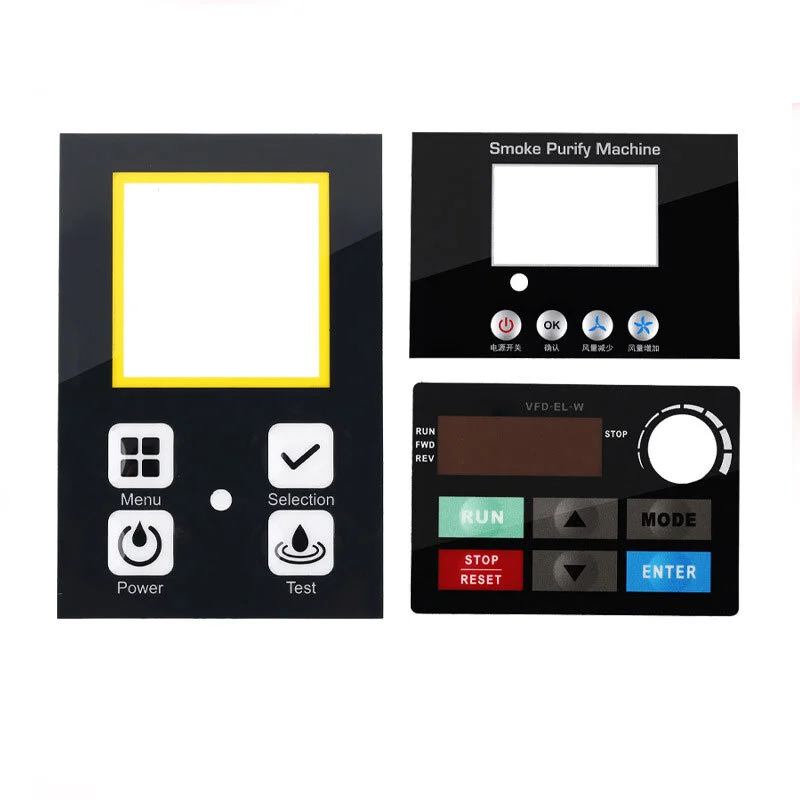
Polycarbonate Acrylic Screen Panel With High Hardness for Touchscreens
A PC/PMMA screen panel is a type of optical film or cover panel used in display technology, typically as a top layer for LCDs, touchscreens, or display modules. It is composed of a multilayer structure combining Polycarbonate (PC) and Polymethyl Methacrylate (PMMA), often through co-extrusion or lamination processes.
Product Name: PC/PMMA screen panel
Thickness: 0.2mm-1mm, customized
Width: MAX 2000mm, custom
Length: custom
Warranty: 2 years
Product Description
A PC/PMMA screen panel is a type of optical film or cover panel used in display technology, typically as a top layer for LCDs, touchscreens, or display modules. It is composed of a multilayer structure combining Polycarbonate (PC) and Polymethyl Methacrylate (PMMA), often through co-extrusion or lamination processes.
Key Features:
Material Composition:
PC (Polycarbonate): Provides high impact resistance, durability, and flexibility, making the panel less prone to cracking or shattering.
PMMA (Acrylic): Offers excellent optical clarity, scratch resistance, and UV stability, ensuring high transparency and surface hardness.
Structure:
The panel usually consists of a PMMA outer layer for hardness and optical performance, bonded to a PC substrate for toughness. Some designs may include multiple layers or coatings for additional functionalities.
Advantages:
Enhanced Durability: Combines the strength of PC with the hardness of PMMA, resisting impacts, scratches, and daily wear.
Optical Performance: High light transmittance, minimal haze, and good anti-glare properties (if treated).
Lightweight: Thinner and lighter than traditional glass panels, beneficial for portable devices.
Cost-Effective: Often more affordable than pure glass or other high-end alternatives while maintaining good performance.
Applications:
Widely used in smartphones, tablets, laptops, automotive displays, industrial control panels, and consumer electronics where a balance of durability, clarity, and cost is required.
Also employed in touchscreens (resistive or capacitive) as a protective cover lens.
Limitations:
May be less scratch-resistant than glass (e.g., Gorilla Glass) unless specially coated.
Can be susceptible to chemical damage or yellowing under prolonged UV exposure if not adequately treated.
In summary, a PC/PMMA screen panel is a hybrid composite material solution that optimizes both mechanical robustness and optical quality, serving as a practical alternative to pure glass or single-polymer panels in many display applications.
product parameters
|
Characterics |
Unit |
Data |
|
Impact strength |
J/m |
88-92 |
|
Light transmission |
% |
50 |
|
Specify Gravity |
g/m |
1.2 |
|
Elongation at break |
% |
≥130 |
|
Coefficient thermal expansion |
mm/m℃ |
0.065 |
|
Service temperature |
℃ |
-40℃~+120℃ |
|
Heat conductively |
W/m²℃ |
2.3-3.9 |
|
Flexural strength |
N/mm² |
100 |
|
Modulus of elasticity |
Mpa |
2400 |
|
Tensile strength |
N/mm² |
≥60 |
|
Soundproof index |
dB |
35 decibel decrease for 6mm solid sheet |
Custom thickness 0.2mm-1mm
AtThe typical thickness of a PC/PMMA composite panel for screen applications generally ranges from 0.5 mm to 3.0 mm. However, the most common and industry-standard thicknesses fall within a narrower band.
Standard Thickness Ranges by Application:
Mobile Devices (Smartphones, Tablets):
Range: 0.5 mm to 1.2 mm
Most Common: 0.7 mm to 1.0 mm
Rationale: This range provides an optimal balance between slim design, sufficient stiffness for touch operation, and impact resistance. High-end models might use the thinner end for premium feel, while rugged or budget devices may use thicker panels for extra durability.
Automotive Displays & Industrial HMIs:
Range: 1.2 mm to 2.5 mm
Most Common: 1.5 mm to 2.0 mm
Rationale: These applications demand higher durability, structural integrity for larger unsupported areas, and often require integration with capacitive touch sensors. Thicker panels resist vibration, temperature fluctuations, and potential impacts better.
Consumer Electronics & Appliance Panels (TV Bezels, Control Panels):
Range: 1.0 mm to 3.0 mm
Most Common: 1.5 mm to 2.5 mm
Rationale: Thickness is chosen for mechanical strength, ease of mounting/fastening, and to prevent flexing or bowing over larger surface areas.
UV Printing Customization Services
Unlock endless design possibilities for your PC/PMMA display panels with our professional UV printing services. Create stunning visual experiences that elevate your products and captivate your audience.
Key Features & Benefits
1. Superior Print Quality
High-Resolution Graphics: Achieve crisp, vibrant prints up to 1200 dpi resolution
True Color Reproduction: Advanced color matching for brand consistency
Exceptional Detail: Perfect for logos, patterns, textures, and intricate designs
2. Material Compatibility
Optimized for PC/PMMA Panels: Specially formulated UV inks for perfect adhesion
Multi-Layer Printing: Compatible with various panel thicknesses (0.5mm - 3.0mm)
Surface Versatility: Works on glossy, matte, and textured finishes
3. Durability & Performance
Scratch & Fade Resistant: UV-cured inks create a hardened, durable surface
Chemical Resistance: Withstands cleaning agents and environmental exposure
Long-Lasting Brilliance: Maintains visual appeal through product lifespan
4. Customization Options
Full Surface Coverage: Complete panel customization
Partial Printing: Strategic branding and design placement
Transparent Effects: Innovative see-through designs
Functional Printing: Integration with display cutouts and sensors
Product application
PC/PMMA composite panels are widely used across industries due to their balanced properties of optical clarity, impact resistance, lightweight nature, and cost-effectiveness. Their key applications include:
1. Consumer Electronics
Smartphones and Tablets: Frequently used as protective cover lenses for displays and touchscreens in mid-range and budget devices. They offer a good compromise between the premium feel of glass and necessary durability.
Laptop and Monitor Bezels/Shells: Used for the non-display frame surrounding the screen, providing a glossy, aesthetic finish that is more impact-resistant than brittle alternatives.
Television Front Frames: Applied in some TV models as part of the border or decorative front panel.
2. Automotive Displays
Central Control Panels (Infotainment Systems): Used as the touch-sensitive cover lens for in-car entertainment, navigation, and climate control systems. Their shatter-resistance is a critical safety feature.
Instrument Clusters: Serves as the clear cover over the digital or semi-digital gauge clusters behind the steering wheel.
Rear-Seat Entertainment Screens: Provides a durable viewing surface for passenger screens.
3. Industrial and Commercial Equipment
Human-Machine Interface (HMI) Panels: Ideal for touchscreens on factory automation equipment, medical devices, ATMs, kiosks, and point-of-sale (POS) systems where durability against impacts and chemicals is essential.
Control Panels: Used on appliances, machinery, and vending machines.
Nameplates and Indicator Windows: Used for backlit logos, status indicators, and informational labels due to good light diffusion properties.
4. Home Appliances
Control Panels on Appliances: Commonly found on microwaves, ovens, washing machines, and refrigerators as the interactive touch surface or protective window for displays.
5. Lighting and Diffusers
LED Light Guides and Covers: PMMA's excellent light transmission and PC's toughness make the composite suitable for LED panel lights, light guide plates (LGPs), and decorative lighting covers where even diffusion and durability are needed.
Why choose us?
ABOUT MCLPANEL
Our advantage
FAQ
With the rapid iteration of new energy technology and intelligent electronic equipment, internal fire prevention, electrical insulation and operational safety have become core assessment indicators for industrial manufacturing. Traditional insulating films often face defects such as poor flame resistance, low temperature resistance and unstable insulation performance, which bring potential safety hazards to precision electronic and electrical equipment. The newly upgraded flame retardant polycarbonate (PC) film solves the industry safety pain points perfectly. Featuring excellent flame retardant performance, superior electrical insulation, stable high-temperature resistance and flexible processability, it has become a key internal safety protective material, widely used in new energy batteries, industrial electrical equipment, commercial electronic components and consumer electronics fields, effectively improving the overall safety level of electronic and electrical products.
To address the common pain points of traditional polycarbonate sheets such as easy surface scratching, poor wear resistance and limited service life in high-frequency usage scenarios, a new generation of double-side hard coated high wear-resistant polycarbonate sheet has been officially released. Optimized with dual-sided professional hardening coating technology and premium PC raw materials, the product perfectly balances superior surface wear resistance, high light transmittance, extreme impact resistance, reliable flame retardant performance and versatile processing adaptability. It fills the market gap of durable transparent PC materials for industrial equipment protection, commercial decoration and safety isolation, becoming an upgraded alternative to ordinary PC sheets and acrylic sheets.
Specialized for high-precision and dust-free industrial environments, the upgraded anti-static polycarbonate (PC) sheet stands out with stable electrostatic dissipation performance. Different from ordinary PC sheets prone to static buildup and dust adhesion, this functional PC sheet effectively eliminates static charges and blocks dust absorption. It perfectly balances premium optical transparency, extreme impact resistance, flame retardancy and flexible processing performance, becoming an ideal high-performance material for electronics manufacturing, cleanroom engineering and precision equipment protection.
Manufacturers and commercial operators worldwide face a common dilemma: balancing exquisite visual presentation and reliable equipment safety protection in transparent enclosure applications. To solve this pain point, our brand launches customized acrylic (PMMA) boxes and polycarbonate (PC) plate boxes with differentiated functional positioning. With ultra-high transparent texture, flexible structural customization, excellent physical protection performance and professional industrial adaptability, the two series of products focus on high-value display scenarios and industrial safety scenarios respectively, providing targeted transparent box solutions for retail, exhibition, electronic manufacturing and industrial production fields.